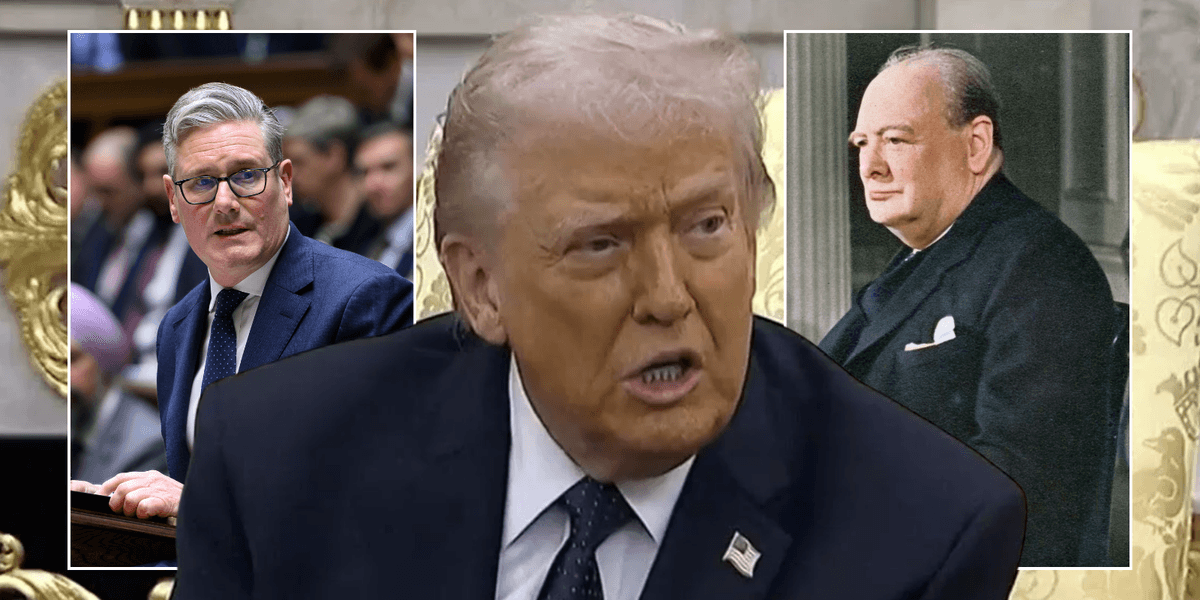
Starmer's Iran Response Ignites Controversy: Trump, Badenoch Question UK Stance
The volatile landscape of Middle Eastern geopolitics has once again pulled global attention, with recent escalations involving Iran putting a spotlight on international alliances and national leadership. At the heart of a significant political storm is UK Prime Minister Keir Starmer, whose measured response to the conflict has drawn sharp criticism from unexpected corners: former US President Donald Trump and Conservative leader Kemi Badenoch. Their critiques not only challenge Starmer’s leadership but also raise pressing questions about the strength and direction of the much-vaunted UK-US "special relationship." As tensions simmer, understanding the nuances of Starmer's strategy, the criticisms levelled against it, and its broader implications for Britain's global standing becomes crucial.
Starmer Under Fire: Trump's "No Winston Churchill" Jab
The controversy erupted following reports that Sir Keir Starmer initially declined the use of UK bases for US-Israel strikes targeting Iranian assets. This decision prompted a swift and unequivocal rebuke from Donald Trump, who publicly slammed the Prime Minister, stating he was "no Winston Churchill" and expressing his belief that the UK-US relationship "was not what it was." Trump's "shocking" assessment implied a significant weakening of the historical bond, suggesting a departure from the unwavering alliance often symbolised by Churchill and Roosevelt.
Starmer, however, has steadfastly defended his cautious approach, asserting that his "number one priority" is the protection of British nationals. He made it clear that any decision for the UK to join a war required a "lawful basis and a viable, thought-through plan." This principle, he explained, governed his initial refusal to commit UK forces or allow offensive strikes from British soil without these preconditions being met. The situation evolved rapidly; on Sunday, the UK did agree to a US request to use British military bases, but specifically for defensive strikes aimed at neutralising Iranian missile sites.
Dismissing claims of a strained relationship, Starmer countered Trump's narrative by highlighting the practical cooperation already underway. He pointed to US planes operating out of British bases as evidence of "the special relationship in action," rather than fixating on "President Trump's latest words." This response underscores a fundamental difference in perspective: for Starmer, the alliance is defined by tangible military collaboration and shared strategic goals, not by the rhetoric of individual politicians. This incident also illuminates the complex tightrope any UK leader must walk, balancing solidarity with key allies against sovereign decision-making and national interests.
Badenoch's Blistering Critique: "Catching Arrows, Not Stopping the Archer"
While Trump's criticism came from across the Atlantic, Keir Starmer also faced intense scrutiny on the domestic front from Conservative leader Kemi Badenoch during Prime Minister's Questions. Badenoch launched a scathing attack on Starmer's Iran strategy, accusing him of "asking our allies to do what we should be doing ourselves." She expressed frustration that the UK was not taking "offensive action" even after British bases in Bahrain and Cyprus reportedly came under attack.
Badenoch didn't mince words, portraying Starmer's strategy as reactive rather than proactive. "I would say to Labour MPs, we are in this war whether they like it or not," she declared, adding, "What is the prime minister waiting for?" Her metaphor of "catching arrows rather than stopping the archer" powerfully encapsulated her view that the government was merely defending against threats without neutralising their source. Specific concerns were also raised about the perceived slow deployment of military assets, with Badenoch noting that HMS Dragon, a Royal Navy warship, was still in Portsmouth at the time of her statement, questioning the government's preparedness and commitment to military investment.
Starmer, in turn, rebuffed Badenoch's accusations by flipping the script on defence spending. He accused the previous Conservative governments of cutting the defence budget, missing Army recruitment targets, and leaving Britain's armed forces "hollowed out." This exchange highlights a perennial political debate over defence expenditure and readiness, especially pertinent during times of international crisis. While Badenoch advocates for more assertive military action and investment, Starmer appears to prioritise a carefully calibrated defensive posture backed by legal justification, acknowledging past shortfalls in defence capabilities that could impact any large-scale engagement.
Unpacking Starmer's Iran Strategy: A Defensive Posture
Despite the intense criticism, Sir Keir Starmer has consistently articulated a clear, albeit measured, strategy for addressing the threat from Iran. His approach prioritises de-escalation while ensuring the robust protection of UK interests and personnel in the region. Starmer detailed the government's ongoing actions, which include:
*
Aerial Interception: "Planes in the sky in the region intercepting incoming strikes," actively reducing immediate threats.
*
Enhanced Regional Capability: Deploying more military assets and personnel to Cyprus to bolster defence capabilities.
*
Strategic Base Utilisation: Allowing US planes to use UK bases for defensive operations aimed at "tak[ing] out Iran's capability to strike," underscoring practical, collaborative deterrence.
*
Pre-deployment of Assets: For several weeks prior to the major escalations, the UK had already been deploying radar systems, ground-based air defence, counter-drone systems, and F35 jets to the region.
*
Naval and Air Reinforcements: Wildcat helicopters, equipped with anti-drone capabilities (Martlet missiles), are slated to arrive in Cyprus, with the Royal Navy warship, HMS Dragon, also deploying to the region. Western officials later clarified that HMS Dragon was being loaded with ammunition and expected to sail soon, with the Wildcats arriving sooner.
These deployments are not abstract; they come in the wake of concrete threats. Early reports of a suspected Iranian drone crashing into the runway at the UK's RAF Akrotiri base in southern Cyprus, followed by the timely interception of two more drones headed for the base, starkly illustrate the immediate dangers and the necessity of robust defences. Starmer's strategy, therefore, can be interpreted as a calculated effort to deter further aggression and protect British assets and personnel without initiating offensive warfare. For a deeper dive into the specifics of these deployments, you can refer to our article:
UK Military Bolsters Defenses: Starmer's Iran Strategy Unpacked.
The UK-US "Special Relationship": Strained or Steadfast?
The core question emerging from this diplomatic skirmish is the true state of the UK-US "special relationship." Donald Trump's assertion that the relationship "was not what it was" signals a potential strain, particularly if he were to return to the US presidency. Historically, this bond has weathered numerous political shifts and differing strategic priorities, often defined by shared values, intelligence cooperation, and military interoperability.
Starmer's retort, emphasising practical collaboration like shared base usage, suggests that the foundational elements of the alliance remain strong, transcending individual political rhetoric. It highlights that the "special relationship" is multifaceted, extending beyond the personal chemistry between leaders to deep institutional ties within defence, intelligence, and diplomacy. The reality may be that while political statements can create friction, the underlying operational collaboration between the UK and US armed forces and intelligence agencies continues largely unimpeded.
However, the incident does reveal differing strategic appetites. The US, particularly under certain administrations, may favour more immediate and assertive military responses, while the UK under Starmer prioritises a lawful basis and a meticulously planned approach. This divergence is not necessarily a sign of a broken relationship but rather a reflection of sovereign nations making independent decisions based on their own assessments of risk, legality, and national interest. The ability of the UK to say "no" to certain actions, even from its closest ally, could be seen as a demonstration of independent foreign policy, rather than weakness. For more analysis on Starmer's principled stand, explore
Keir Starmer's Stance on Iran: Defending UK Interests & Lawful War. Navigating these differences with diplomatic skill is critical for any UK leader to maintain influence while safeguarding national autonomy.
Conclusion
The criticism leveled by Donald Trump and Kemi Badenoch against Keir Starmer's response to the Iran situation underscores the profound complexities of modern international relations and defence strategy. While Starmer has faced accusations of being overly cautious or indecisive, his defence consistently hinges on the necessity of a "lawful basis" and a "thought-through plan" for any military engagement, coupled with an unwavering commitment to protecting British nationals. The practical measures taken—from deploying air defence assets to facilitating defensive US operations from UK bases—paint a picture of a government committed to robust, albeit defensive, action. The "special relationship" with the US, though tested by political rhetoric, appears resilient in its operational aspects, demonstrating a nuanced partnership rather than a blind allegiance. As the situation in the Middle East continues to evolve, Starmer's measured approach will remain under intense scrutiny, shaping not only the UK's role on the global stage but also the perception of its alliances in an increasingly unpredictable world.